
The LGBTIQ+ Atlantic Forum on Human Rights includes among its commitments a study into creating a university chair specialising in diversity, with teaching delivered from La Palma
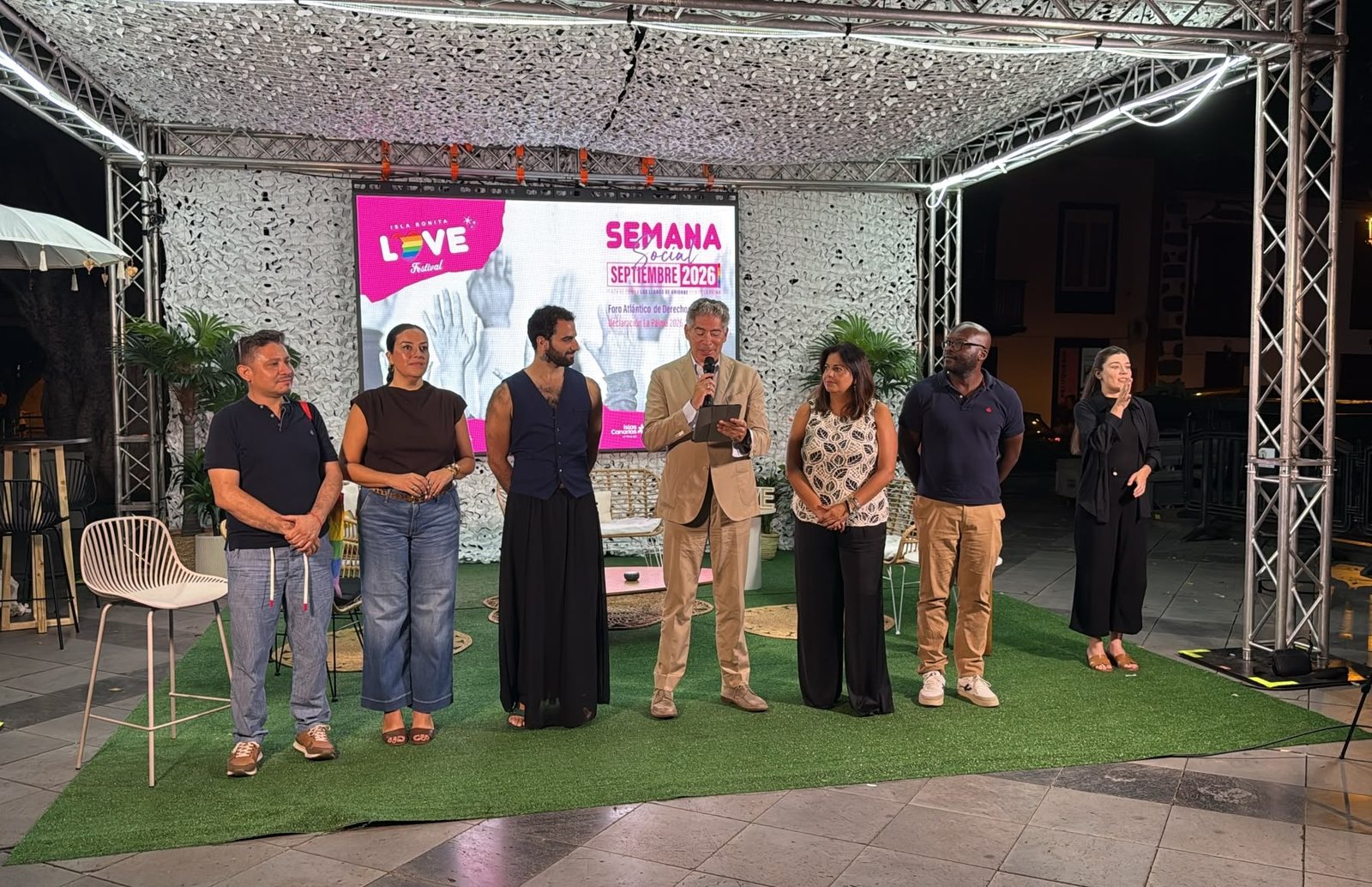
On Wednesday 16 September, Los Llanos de Aridane hosted the LGBTIQ+ Atlantic Forum on Human Rights, held as part of the Social Week of the tenth Isla Bonita Love Festival. The meeting approved the La Palma 2026 Declaration, a manifesto setting out the commitments of local administrations and civil society on human rights and diversity.
The document sets out a roadmap for local administrations, within their powers, and for civil society on human rights and diversity.
Among its main proposals is to study the creation of a University Chair in Diversity, with teaching and training delivered from La Palma. The university initiative is part of the section on Social Action, Equality and Diversity, which also includes the creation of human rights and activism schools, the consolidation of existing programmes and the strengthening of the teams working in this field.
In the field of education, the text also includes the development of a training project with the La Palma School of Art from an LGBTIQ+ diversity perspective, as well as work with children and young people.
The text sets out the commitment to make the island a “space of welcome, memory and non-discrimination” and argues that people persecuted because of their sexual orientation, gender identity or gender expression should be able to find in La Palma an environment that respects their dignity.
In its statement of principles, the Forum calls for work on the community’s rights to “not depend solely on the spotlight of one week a year”, but on a roadmap that activists, civil society and public administration can review together.
The measures include continuing historical memory initiatives for the victims of Spain’s Social Danger Law, maintaining the Atlantic Forum on Human Rights and strengthening coordination with the LGBTIQ+ association Violetas and other community organisations, respecting their autonomy and their capacity for direct dialogue.
The text also establishes a commitment to consult LGBTIQ+ groups or specialist profiles on the programming and participants of events such as the Isla Bonita Love Festival. This is complemented by reducing the administrative burden on organisations working in human rights and a commitment to work with specific funds for international cooperation and solidarity.
The declaration also sets up a monitoring mechanism in the form of a short public report at the next edition of the Love Festival Social Week, which will assess each commitment, indicating “whether it has been fulfilled, is in progress or has not been started”.
Dated 16 September 2026 and read out in the Plaza de España in Los Llanos de Aridane by writer and broadcaster Boris Izaguirre, the declaration has the support and participation of institutional representatives, activists, cultural figures and human rights defenders. They include Natalia Zalazar (Violetas); Boris Izaguirre himself; Djedje Batlle, PhD candidate in Anthropology at the Autonomous University of Madrid; Mahmud Assy, Egyptian queer activist, refugee in Spain and founder of Eufonía Diversity; Alfredo Pazmiño, member of the Canary Islands Anthropology Association; Besay Viña, president of La Palma’s LGBTIQ+ group; and representatives of the island’s community associations.